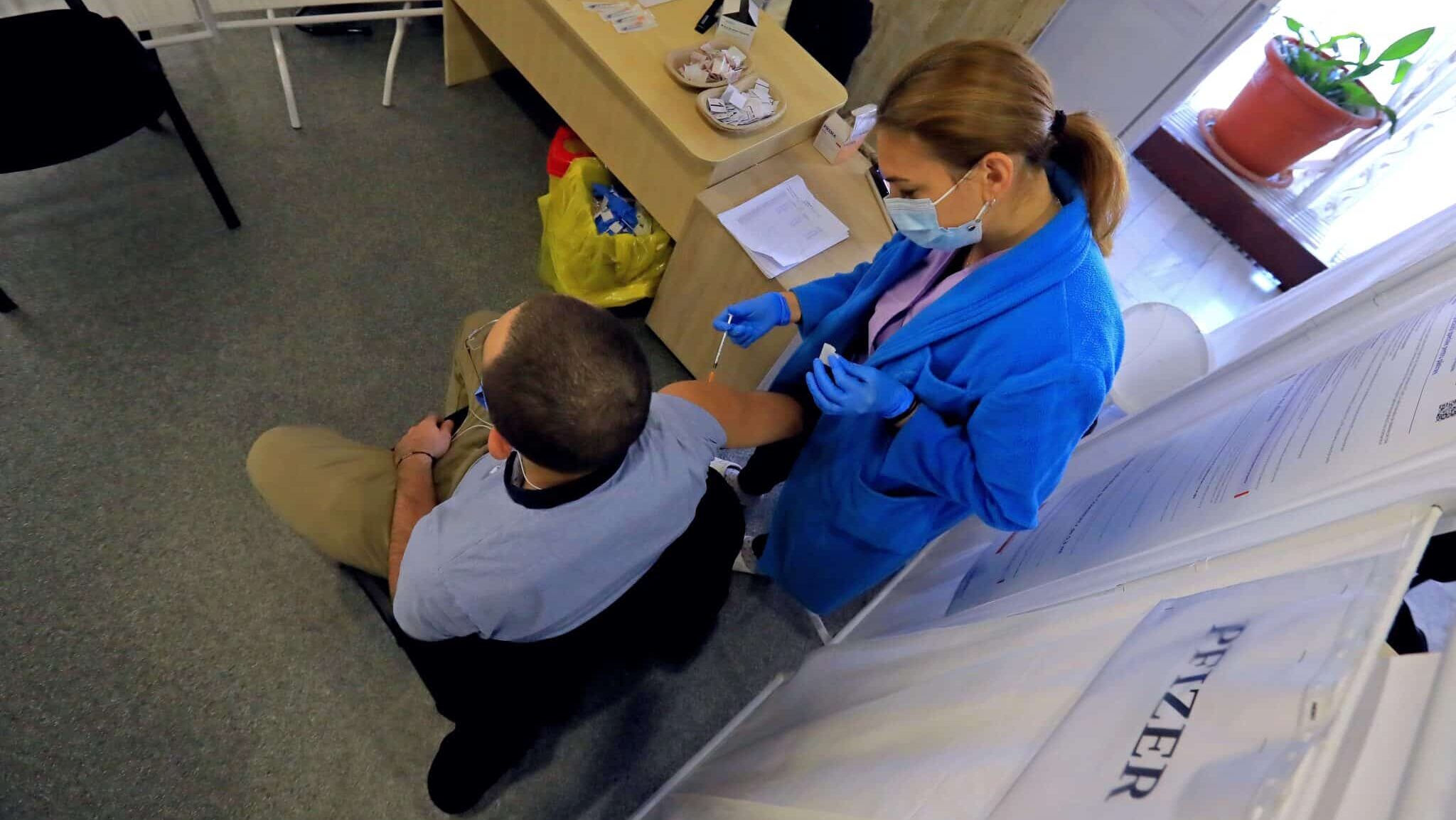
Romanian officials say they will struggle to find the funds needed to pay damages after a Belgian court ordered Romania to pay more than 600 million euros for an undelivered shipment of COVID-19 vaccines, as part of a lawsuit filed by US pharmaceutical giant Pfizer.
Health Minister Alexandru Rogobete said that the Ministry of Health will have to pay, but that it does not have the funds – so the government will have to find money from the state budget to cover the payment.
“Even if the ruling is not yet enforceable, we will most likely have to pay this money from the state budget … We still do not know all the details – what the penalties are and how they will be calculated. But we will have to pay,” Rogobete stated on Wednesday.
The Brussels Court of First Instance ruled that Romania must accept the delivery of the COVID-19 vaccines produced by Pfizer and its partner BioNTech.
In 2021, the European Commission negotiated a large-scale agreement with Pfizer and its partner BioNTech, after which individual EU member states opted in by placing their own orders.
Critics said the deal lacked transparency and created binding legal obligations that forced countries to pay for vaccine doses even as demand fell, leading to millions of unused COVID-19 shots being discarded.
In 2022, Romania refused to honour the contract, citing the evolution of the pandemic. One year later, the American company filed lawsuits against Romania and Poland to compel them to comply with the contract. Now, the Brussels court has ordered both countries to take delivery of the vaccine doses and pay Pfizer.
The Romanian government has not said if it will appeal the decision. As the financial burden becomes clearer, politicians have begun trading blame over what many describe as a costly miscalculation.
Former Health Minister Alexandru Rafila on social media defended his decision to refuse delivery of the doses from Pfizer, arguing that “the real need for vaccination was very low”. He accused his predecessor, Vlad Voiculescu, of submitting inflated vaccine orders.
Voiculescu, in turn, said that during his tenure “there was no end to the pandemic in sight” and accused Rafila and his government of failing to negotiate an opt-out clause with Pfizer, as other EU countries reportedly did.
In a related development, in December 2023, Romania’s National Anticorruption Directorate, DNA, announced it had opened a criminal investigation against former Prime Minister Florin Citu on suspicion of abuse of office over vaccine procurement during the pandemic. The case is ongoing.
As former government officials accuse each other of poor planning and mismanagement, the far-right opposition led by Alliance for the Union of Romanians is calling for those responsible to be investigated and forced to cover the damages incurred by Romania.
Analysts warn that the dispute risks further undermining public trust at a time of broader fiscal strain.
“Against the backdrop of austerity measures adopted by the current government, the payment of 600 million euros will further fuel public discontent and erode confidence in the political class. We can expect public protests and an intensification of tensions within the ruling coalition,” journalist Ruxandra Stanescu told BIRN.
In the nine months since its formation, Romania’s ruling coalition has implemented a series of unpopular measures, including tax and VAT increases as well as public spending cuts, aimed at reducing the budget deficit, which stood at 8.2 per cent of GDP last year, the highest in the European Union.
While these measures have narrowed the deficit, they have also placed strain on the coalition, pushed inflation up toward double digits and tipped the economy into a technical recession. They have also boosted support for the far-right opposition, which now has the highest level of public backing.