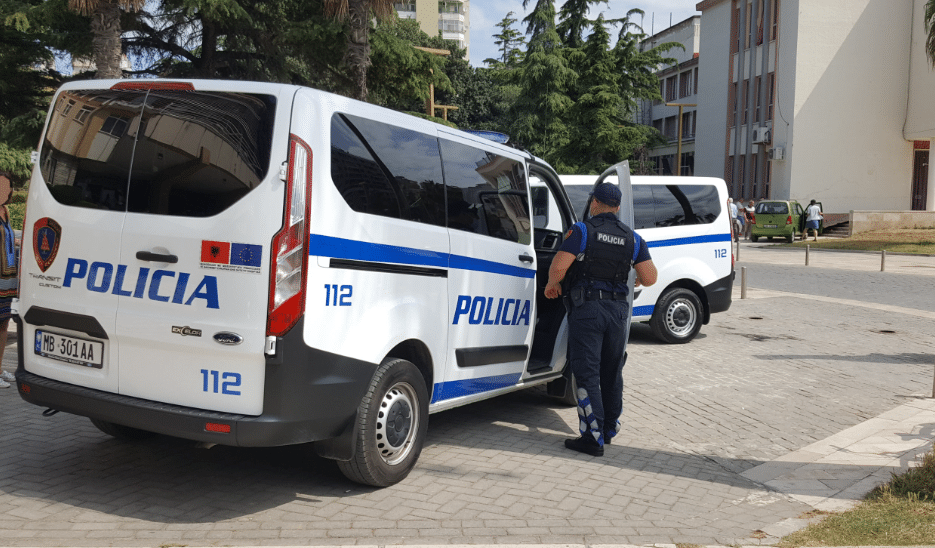
Albanian Police, in collaboration with Austrian Police and supported by Europol, reported that they uncovered 12 locations where call centre fraud operations were operating.
In police raids on the locations on Monday evening and Tuesday morning, the authorities seized 891,735 euros, 443 computers, 238 phones, and six laptops.
The police said that the operation was the result of a two-year investigation and that 10 people were arrested for committing computer fraud, while four others remain wanted for arrest.
The police investigation started after a request for information from the Austrian authorities, which then led to the uncovering of criminal activity.
“The execution of the decisions was carried out by state police officers, in cooperation with the Tirana Prosecutor’s Office, as well as in full coordination with investigators from the Austrian authorities and Europol experts participating in the operation,” the state police said in a press release on Tuesday.
They added that the investigations are ongoing in order to document all the criminal activity and identify other potential people involved.
A BIRN investigation in October last year unveiled that Tirana, with its young, multilingual workforce, has become a hub for call centre crime rings over the past five years.
Organised crime networks are using call centres in Albania to defraud people across Europe, conning them with promises of big profits from scam investments and employing sophisticated social-engineering techniques.
In an increasingly interconnected and digital world, investment fraud has become one of the most widespread forms of financial crime.
According to Interpol, between 2022 and 2023, 85 per cent of international arrest requests, so-called ‘red notices’, concerned cases of fraud.
In 2023 alone, Interpol’s Financial Crime and Anti-Corruption Centre supported more than 700 investigations into fraud schemes worth a total of $1.2 billion, or one billion euros. One of the two main types of fraud involved fake investment schemes.
Victims are lured by social media ads, fraudulent websites and apps, and telemarketing operations run from call centres, where operators make unsolicited calls and apply psychological pressure or social-engineering techniques to convince targets to invest in bogus financial schemes, promising high returns.
The widespread use of cryptocurrencies has opened new avenues for these types of fraudsters to operate and launder the illicit earnings.