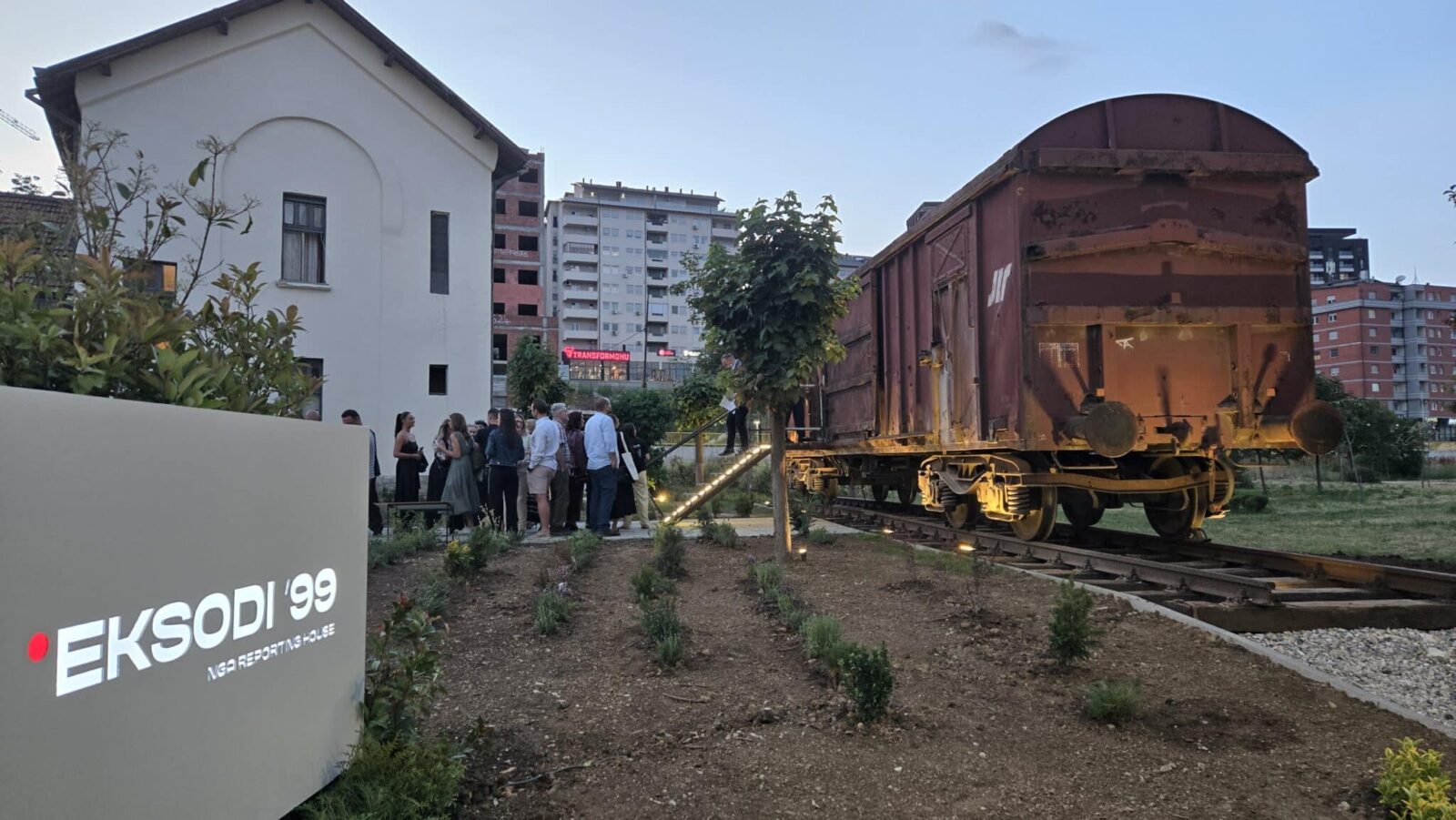
An exhibition opened on Wednesday at Pristina railway arrangement exhibiting forty eight testimonies of Kosovo Albanians who had been forcibly expelled from Kosovo from March to June 1999 by Serbian forces and transported basically to what became then Macedonia in crowded railway wagons.
The exhibition, “Exodus ’Ninety nine”, is the 2nd build for BIRN’s museum on the Kosovo battle, Reporting Dwelling. Positioned at Pristina railway arrangement, it consists of an broken-down put collectively wagon with monitors interior, on which the tales of the participants might perchance perchance be heard and viewed.
The tales are divided into four subject matters: expulsion, lifestyles in refugee camps, staying with host households, and return. Some testimonies are from participants who weren’t expelled however went into hiding and joined the armed resistance of the Kosovo Liberation Navy, KLA – or whose put collectively became grew to change into aid after the Kosovo Albanian baby-kisser Fehmi Agani became pulled off it and killed.
BIRN Kosovo director Jeta Xharra, the producer of Reporting Dwelling, said on the opening that “the root of this wagon came from a extremely talented artist, Gazmend Ejupi, after he heard the tales of refugees. One refugee recalled how when there had been no more passenger vehicles, Serbian forces started the utilization of two varied reach of transport for the refugees – vehicles and freight wagons. When he heard this, the curator went to the locomotive graveyard and now now we possess the tales shown interior one wagon.
“Most of the testimonies are from adults who had been children on the time. It is fascinating how many particulars they endure in mind despite being very younger children on the time,” Xharra said.
About a of the blankets the victims passe on the time were positioned within the wagon. Curator Ejupi said on the opening: “It became hard for of us to present us these blankets, however we hope we are able to possess more artefacts transferring forward and derive more subject material on our history, to guard our past.”
By the level NATO launched its air advertising and marketing campaign in March 1999 to cease the battle in Kosovo, as armed repression by Serbian forces intensified, more than 300,000 participants had already fled their homes after more than a one year of scuffling with and the failure of world efforts to earn to the bottom of the battle.
But the supreme wave of deportations took place for the period of the air strikes, when with regards to 1,000,000 participants had been compelled to fly.
The cattle wagon passe to apartment “Exodus ’Ninety nine” carried refugees from Pristina to Bllace, then all the design in which via the border into what became then Macedonia, in 1999.
An deserted public bog beside Pristina railway arrangement has also been grew to change into staunch into a mini-gallery that reveals some artefacts from the new museum. Amongst them is a anecdote from the archives of INFRAKOS, the final public railway company, which displays how Serbia organised extra put collectively carriages and despatched extra freight wagons from Belgrade for the mass deportation of Kosovo Albanians.