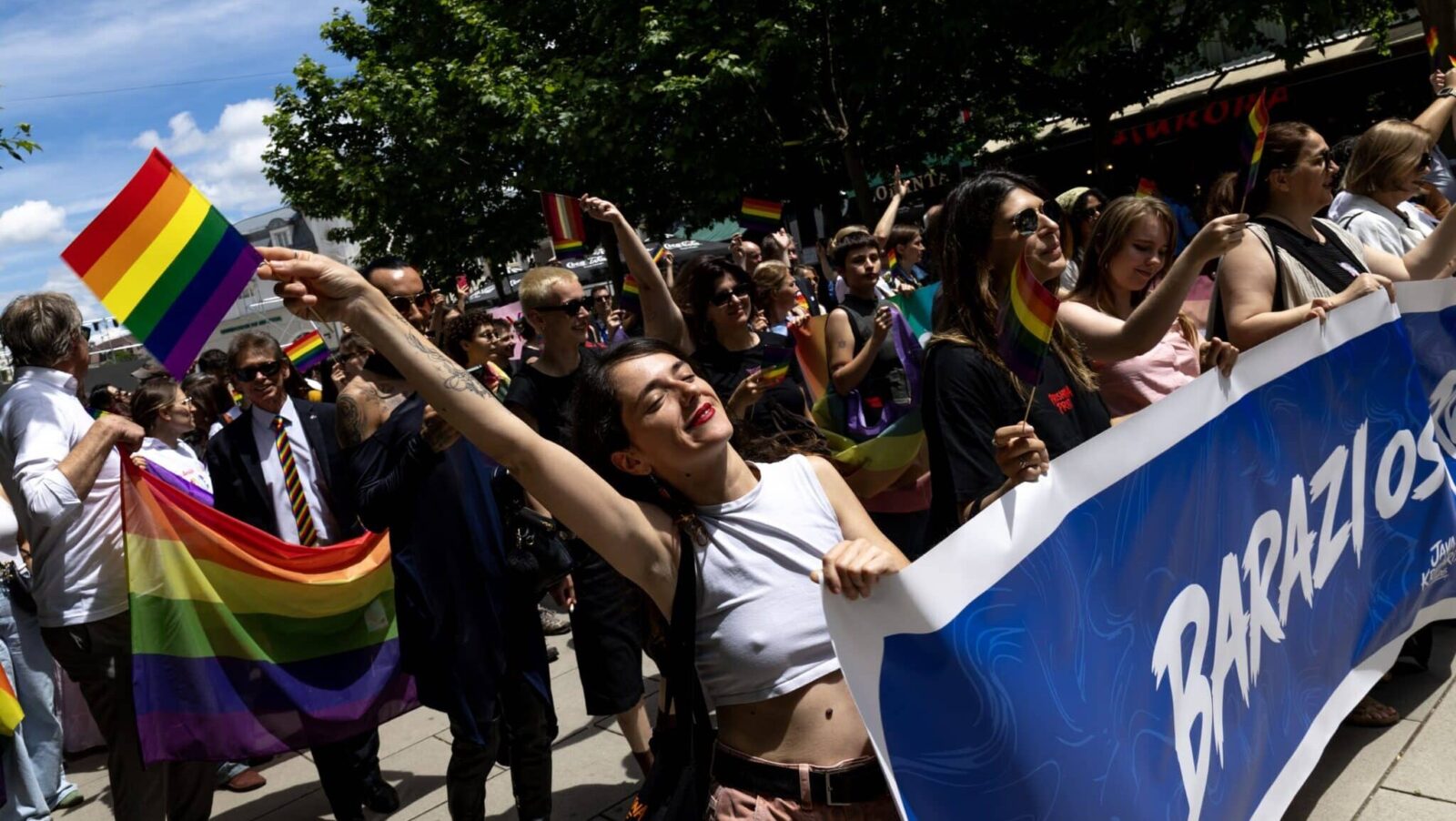
Accompanied by song and flags, a ramification of of other folks on Friday walked during the Kosovo capital calling for equal rights and better inclusion of LGBTIQ+ other folks in Kosovo.
Attendees integrated Feride Rushiti, director of the Kosovo Rehabilitation Centre for Torture Victims and people of the diplomatic corps. No politicians from local or central levels attended the parade, unlike in outdated years.
The tournament concluded with a concert by pop singer Adelina Ismaili.
The parade marked the cease of Pristina Pleasure Week, which began on June 1 and integrated discussions, cultural occasions and performances with a degree of curiosity on equality and human rights.
Among the major occasions became the convention “10 Years of Pleasure, Resistance and Scoot,” held on June 4. The gathering introduced collectively activists, people of the LGBTIQ+ neighborhood, institutional representatives and global partners to replicate on a decade of advocacy and public mobilisation for LGBTIQ+ rights in Kosovo.
“Inspired by the slogan ‘Equality or Come up’, discussions centered on the proceed to this point and the path forward, reaffirming what it without a doubt approach to organise, continue to exist, and stand firm for ten consecutive years,” Pristina Pleasure said on social media. Kosovo’s Ombudsperson, Naim Qelaj, took section in the convention.
Pleasure Week formally opened on the authorities constructing with calls for equality, justice and harmony. Audio system there integrated the performing Minister of Industry and Trade, Mimoza Kusari-Lila, and representatives of diplomatic missions.
The cultural programme integrated the exhibition “Regular Luxuriate in” on the Musty Hivzi Sylejmani Library, exploring subject matters of identification, belonging and representation.
On June 2, performers Agnes Nokshiqi and Donikë Ahmeti staged a ingenious intervention in the courtyard of the Ministry of Education. Utilizing a minimalist space originate featuring chairs and chalk, the performance examined the penalties of the lack of comprehensive sexual education, portraying the human physique as a repository of social taboos and highlighting the psychological and bodily charges of institutional silence.