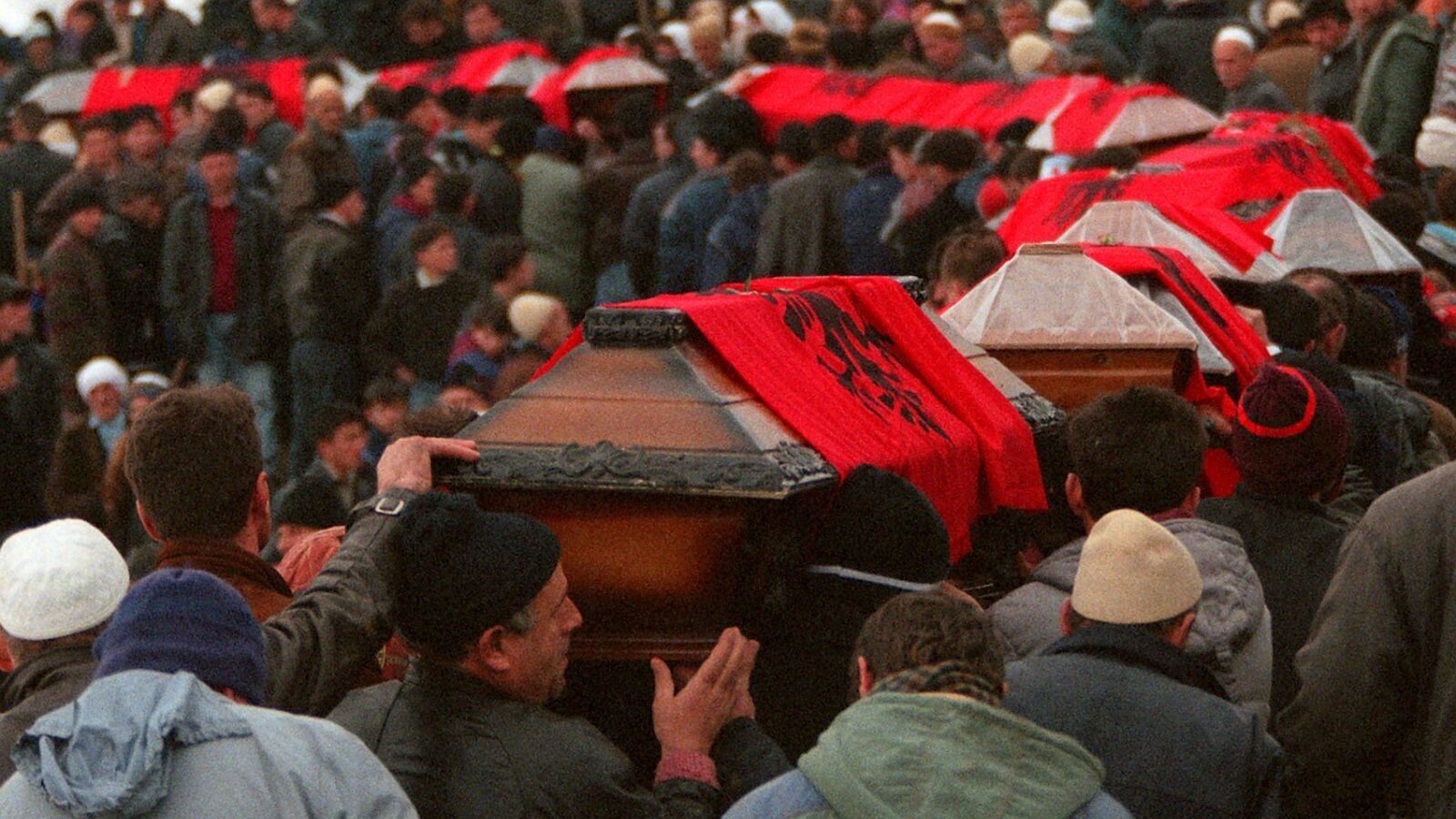
The Pristina Classic Court has positioned five former participants of the Serbian police power into 30-day custody, it announced on Monday. The males are suspected of involvement in the January 15, 1999 bloodbath in Recak/Racak, which became once the catalyst for the NATO bombing of Yugoslavia two months later.
“The Pristina Classic Court – Special Division, has decided on the request of the Special Prosecution of the Republic of Kosovo for the imposition of detention in the criminal case in opposition to the defendants N.P., S.J., B.P., S.M. and S.S., due to the the effectively-basically based suspicion that they dedicated the criminal offence of battle crimes in opposition to the civilian population,” the court docket acknowledged.
The five suspects were arrested and remanded on Sunday.
Prosecutor Ilir Morina acknowledged in a press conference on Sunday after the arrests that the suspects “were a part of the particular items of the Serbian police for the time being who participated in the January 15, 1999 circulate in Recak.
Morina steered the media that the prosecution ancient publicly available video recordings and evidence from The Hague to envision out to title the complete perpetrators.
Serbian security forces surrounded and attacked Recak/Racak on the morning of January 15, 1999 and murdered forty five civilians. They entered the village and raided the homes one after the other. Some villagers tried to mask, however were stumbled on, beaten, taken away and shot.
The Serbian authorities insisted the casualties were all opponents from the Kosovo Liberation Navy, KLA. William Walker, head of the OSCE Kosovo Verification Mission, visited the scene the next day and known as it a “crime in opposition to humanity” and insisted that the victims were civilians.
The bloodbath became a indubitably critical part in NATO’s decision to begin air strikes on Yugoslavia two months later to power Yugoslavia President Slobodan Milosevic to drag his troops out of Kosovo.
The assault formed a part of the Hague Tribunal prosecution’s indictment of Milosevic, however no verdict became once ever delivered because he died in 2006 whereas in detention.
On Sunday, the Serbian government’s workplace for Kosovo described the arrests as “institutional violence”, accusing Kosovo Police and the Prosecutor’s Office of taking revenge on Serbs.
“What we are witnessing here is systematic political and institutional violence by Pristina, led by Kurti, whose sole neutral is to expel and arrest Serbs. As a duvet for its chauvinistic and anti-Serb policies, it makes use of accusations of alleged battle crimes,” the Serbian workplace for Kosovo acknowledged.
The Belgrade-backed party representing Kosovo Serbs, Srpska Lista, also spoke out in opposition to the arrests on Sunday, writing on Facebook that they “portray a brand new wave of intimidation and persecution of Serbs … which goal to invent an ambiance of apprehension, uncertainty and extra strain on the Serbian folk.”
In December 2025, the particular prosecution of Kosovo also filed an indictment in opposition to 21 utterly different folk for battle crimes in opposition to the civilian population in Recak/Racak for the length of the operation by Serbian police forces on January 15, 1999.