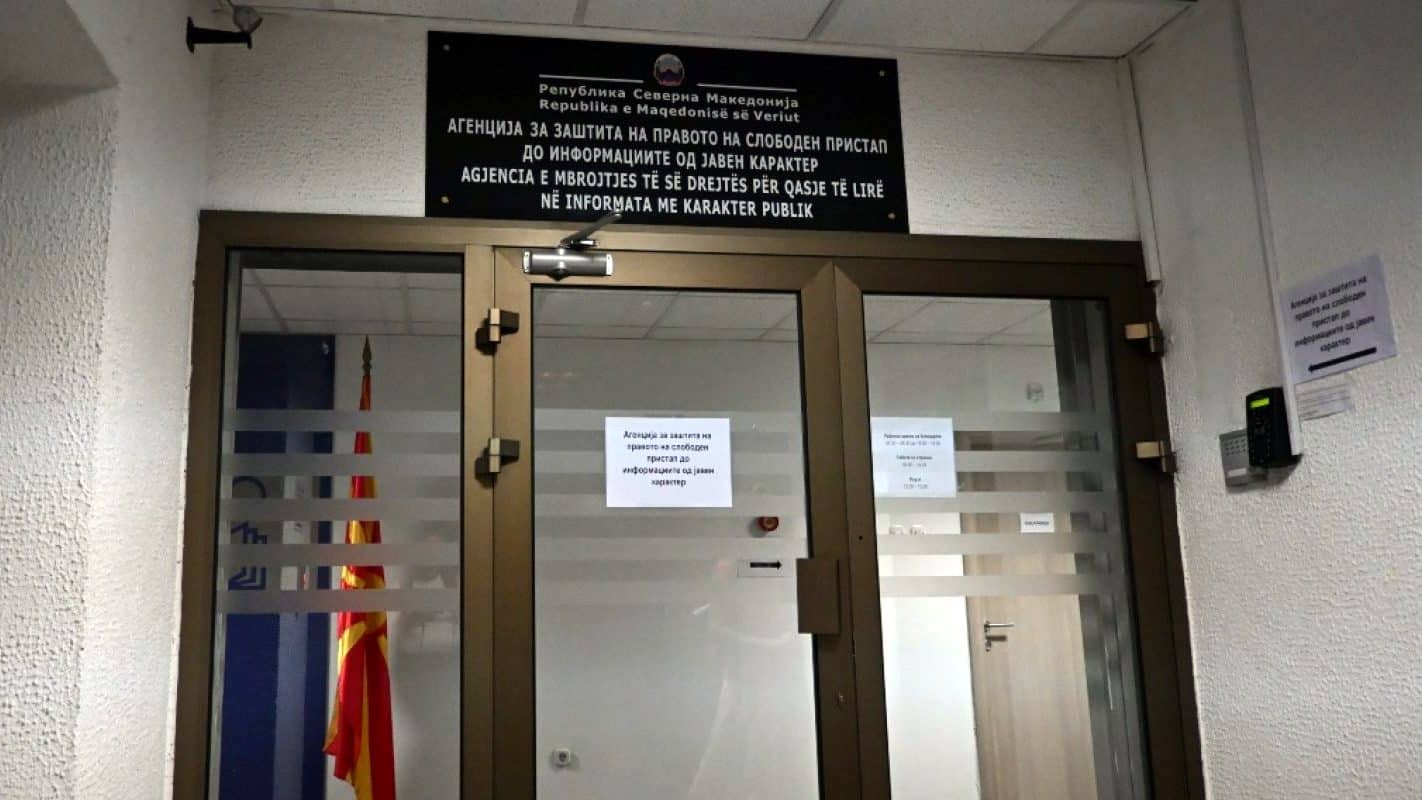
Lawful consultants and transparency advocates win criticised North Macedonia’s Company for the Protection of the Ethical to Free Gain entry to to Public Files after it started requiring digital signatures on email appeals, arguing that this unlawfully restricts procure entry to to public recordsdata.
The Company is the actual institution guilty for deciding appeals when public our bodies refuse or fail to present recordsdata requested below the country’s freedom of recordsdata law.
Till recently, appeals may possibly be submitted by email with out additional formalities. Nevertheless, the Company has started rejecting emailed appeals unless they’re licensed with an digital signature, which charges 2,000 to 4,000 denars (30 to 65 euros) each and each twelve months.
Critics whisper the changes compose an needless monetary and administrative obstacle to exercising a constitutionally guaranteed correct.
“I agree with they hinder free procure entry to to public recordsdata in this country,” German Filkov, surely one of many authors of the Regulations on Free Gain entry to to Public Files and president of the Centre for Civil Communications, an anti-corruption and transparency watchdog, told BIRN.
In choice to organising original limitations, Filkov talked about, the Company ought to focal level on the rising number of whisper institutions that fail to acknowledge to freedom of recordsdata requests.
The Company has defended the original requirement by citing the 2015 Regulations on Recent Administrative Job, which it says obliges anyone talking electronically with whisper institutions to make exhaust of an digital signature.
Nevertheless, the Assert Administrative Inspectorate, which the Company at the birth cited as the source of the steering, told BIRN it had issued no written resolution or instruction requiring one of these notice.
One of many authors of the Regulations on Recent Administrative Job, which the Company cites as the ideally suited basis for its original notice, Skopje university law professor Borce Davitkovski, furthermore wondered the Company’s interpretation.
“They don’t seem like allowed to reject an appeal since it lacks an digital signature,” Davitkovski told BIRN, noting that the law used to be designed to defend electorate reasonably than burden them with needless kinds.
Konstantin Bitrakov, an assistant professor at Skopje’s Assert College of Regulations, argued that the Company used to be misapplying the laws and “atmosphere a negative instance for public institutions that reduction recordsdata, whose choices it’s miles supposed to test on appeal”.
He talked about the ideally suited provisions on digital signatures impart to officers issuing administrative choices, no longer to electorate filing appeals.
Lawyers told BIRN that electorate and organisations whose appeals win been rejected for lacking an digital signature ought to field the Company earlier than the Administrative Court within 30 days.
The dispute comes amid concerns over procure entry to to public recordsdata.
A BIRN diagnosis came upon that the number of appeals filed with the Company over administrative silence or incomplete responses had doubled ultimate twelve months, from over 300 filed in 2024 to over 600 in 2025.
The European Price’s most modern Rule of Regulations Characterize warned that some public institutions proceed to reject recordsdata requests on arbitrary grounds or with significant delays.
In April, the original head of the Company, Petar Gajdov, told BIRN in an interview: “As institutions, we are carrier-oriented in direction of electorate.”